Cultural misunderstandings about Christianity are nothing new. In the 2nd century, a Roman named Caecilius accused Christians of cannibalism and being a threat to society. Today, similar misconceptions still exist—we notice them especially when working with people from other faith backgrounds. These misunderstandings can feel overwhelming and may even seem like barriers to multiplying disciples among them. With effort, these cross-cultural problems can be overcome.
As disciple multiplication happens among an unreached group, the ministry should become more and more locally led. Outsiders must fade into the background, and indigenous believers begin expressing the gospel in their own culturally relevant ways. Over time, the image of Christianity shifts, and barriers can begin to fall.
A Major Misconception
While traveling in India, I once met a well-educated Muslim businessman. During our conversation, I shared my beliefs using familiar language, referring to God as “Allah.” The man was surprised and asked, “Aren’t you a Christian?” His perception of Christianity came from Hollywood movies, and he assumed Christians believed in free sex. This moment opened the door for me to share who Jesus really is and how He taught us to live.
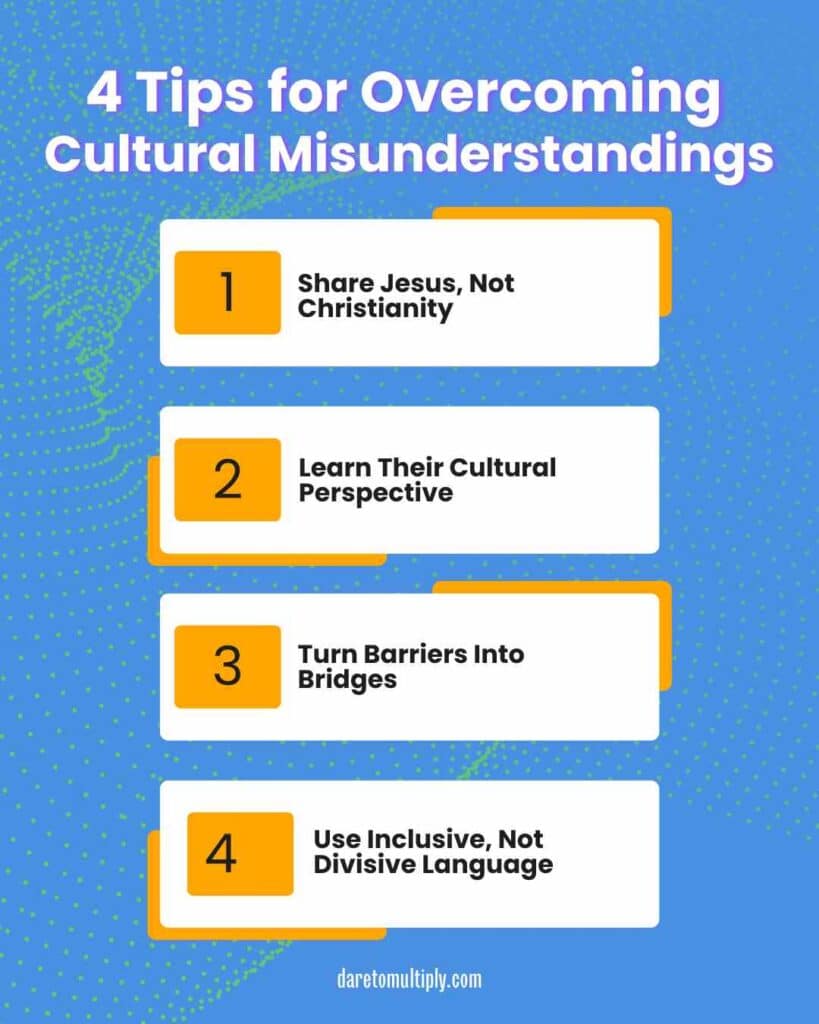
Four Tips for Overcoming Cultural Barriers
1. Share Jesus, Not Christianity
Many misunderstandings stem from organized religion. Instead of promoting Christianity, introduce people to Jesus—His teachings, His love, and His life. Use terms like “Jesus follower” rather than “Christian” to avoid triggering negative stereotypes. Focus on helping people become disciples of Jesus, not members of a religion.
2. Learn Their Cultural Perspective
Talk to local friends from that culture who aren’t believers. Ask what they find difficult about Christianity and listen with humility. Be curious about their beliefs and worldview. This builds trust and opens doors for meaningful conversations. Understanding their perspective helps you share the gospel in ways that make sense to them.
3.Turn Barriers into Bridges
Common objections—like “All religions lead to God”—can be used as starting points. Agree on shared moral values, then ask deeper questions: “Can anyone perfectly follow all these principles? How do you know if you’ve done enough to be saved?” These questions lead to rich discussions about grace and the gospel.
4.Use Inclusive, Not Divisive Words
Avoid “us vs. them” language. Instead of saying “Our God is like this,” focus on shared human experiences and needs. Use personal stories to show how Jesus meets those needs. This approach builds connection and reduces defensiveness.
You Need a Movement!
While these tips help, they won’t eliminate cultural misunderstandings entirely. True change happens when tens of thousands of local Jesus followers live out deeply transformed lives within that culture. As more people see authentic discipleship, perceptions of Christianity begin to shift. That takes time—and it takes a movement.
- What strategies have you used to overcome cultural barriers in your context?
- What worked and what didn’t seem to work?
Share your experiences in the comments below or on the Dare to Multiply Community.

Comments
Thank you very much
Thank you for the teaching please I need deeper understanding I have a complicated cultural people the Bamelekés, the Bettys, the Muslims even sometimes the Catholics more difficult to understand your message there is serious religious barrier and traditional conducts. The French Zone itself is resistant to Christianity unlike the English Zone please can you guide me? Thank you.
Author
Keep reading here and praying for the Holy Spirit to give you insights as to how to bridge these barriers. With our disciple-making course we offer a bonus course about how to invite Muslims to follow Christ. You would find that helpful as well. Have you enrolled in our course? Where are you from?
It ls timely message .